Why Slicing Machines Matter in Real Production Settings
Slicing Machines are easy to underestimate until a kitchen, prep line, or small food factory has to keep pace with orders. Then the value becomes obvious: consistent cuts, less manual labor, better portion control, and a more predictable workflow. For sourcing managers, the decision is not just about buying a machine that cuts food. It is about choosing equipment that fits the product mix, the daily volume, the operator skill level, and the cleaning routine that follows every shift.
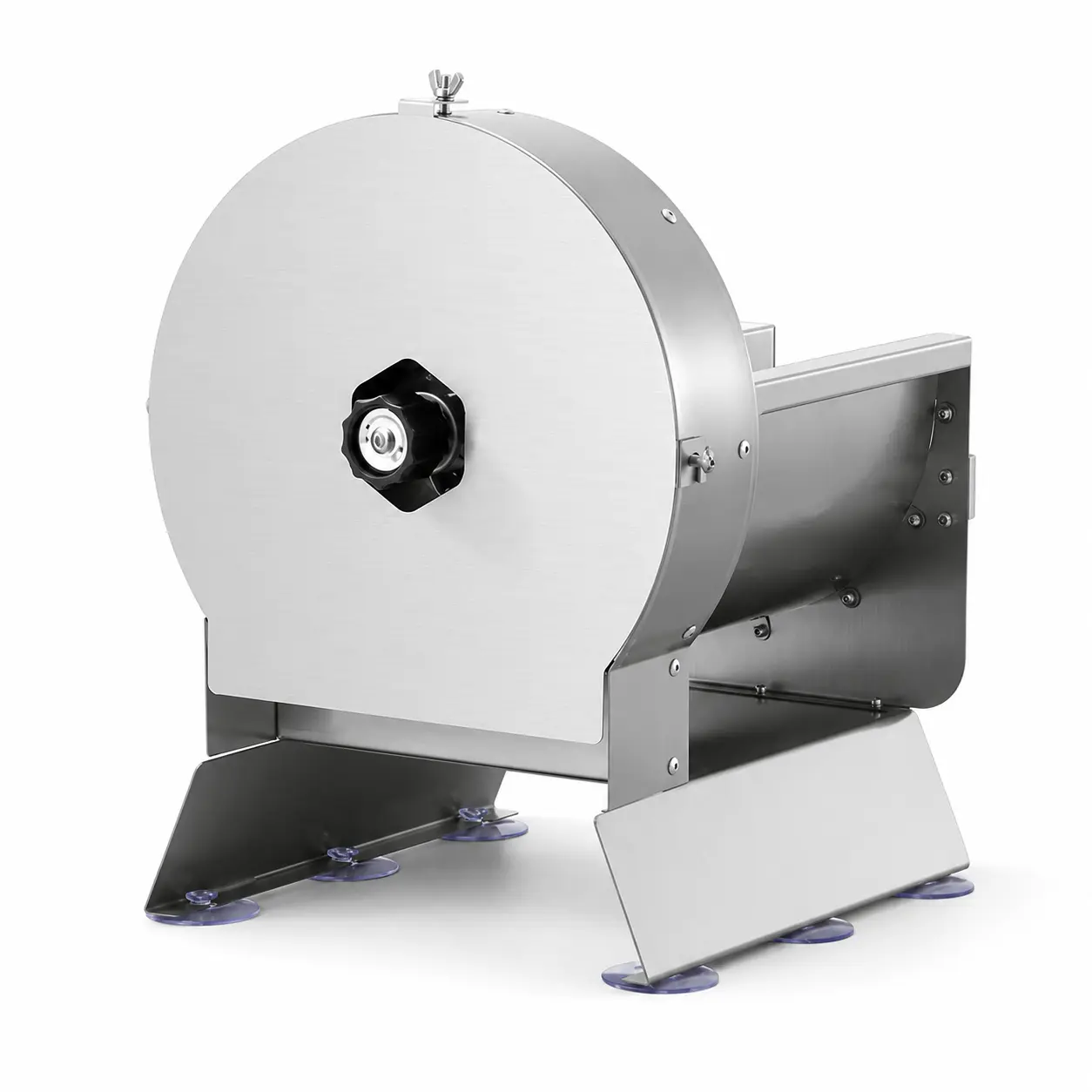
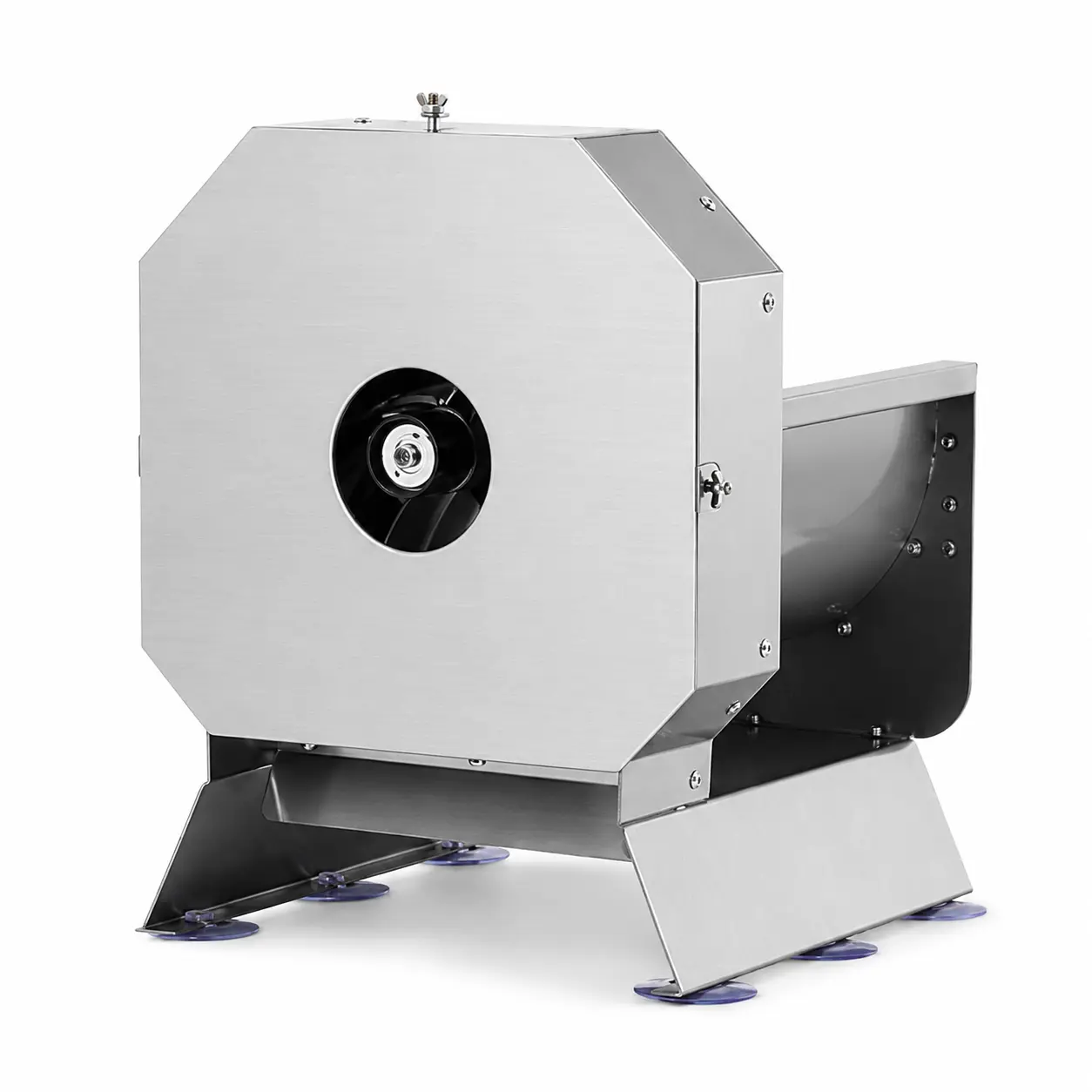
The compact industrial unit described here fits the kind of benchtop equipment many buyers look for when they need a stable, enclosed machine for slicing, shredding, or similar food-preparation work. Its brushed stainless-steel housing, front circular opening, and footed base suggest a machine designed for stationary use in commercial environments rather than light household duty. That matters, because the right slicer is not only about output. It is also about hygiene, space, and how safely people can work around it.
What Buyers Usually Want from This Category
In commercial food equipment, the first question is rarely “What does it look like?” It is usually “What problem does it solve every day?” A good slicing machine can reduce knife work, standardize product appearance, and shorten prep time during peak service. In some operations, the real benefit is consistency from batch to batch. In others, it is simply keeping labor from becoming the bottleneck.
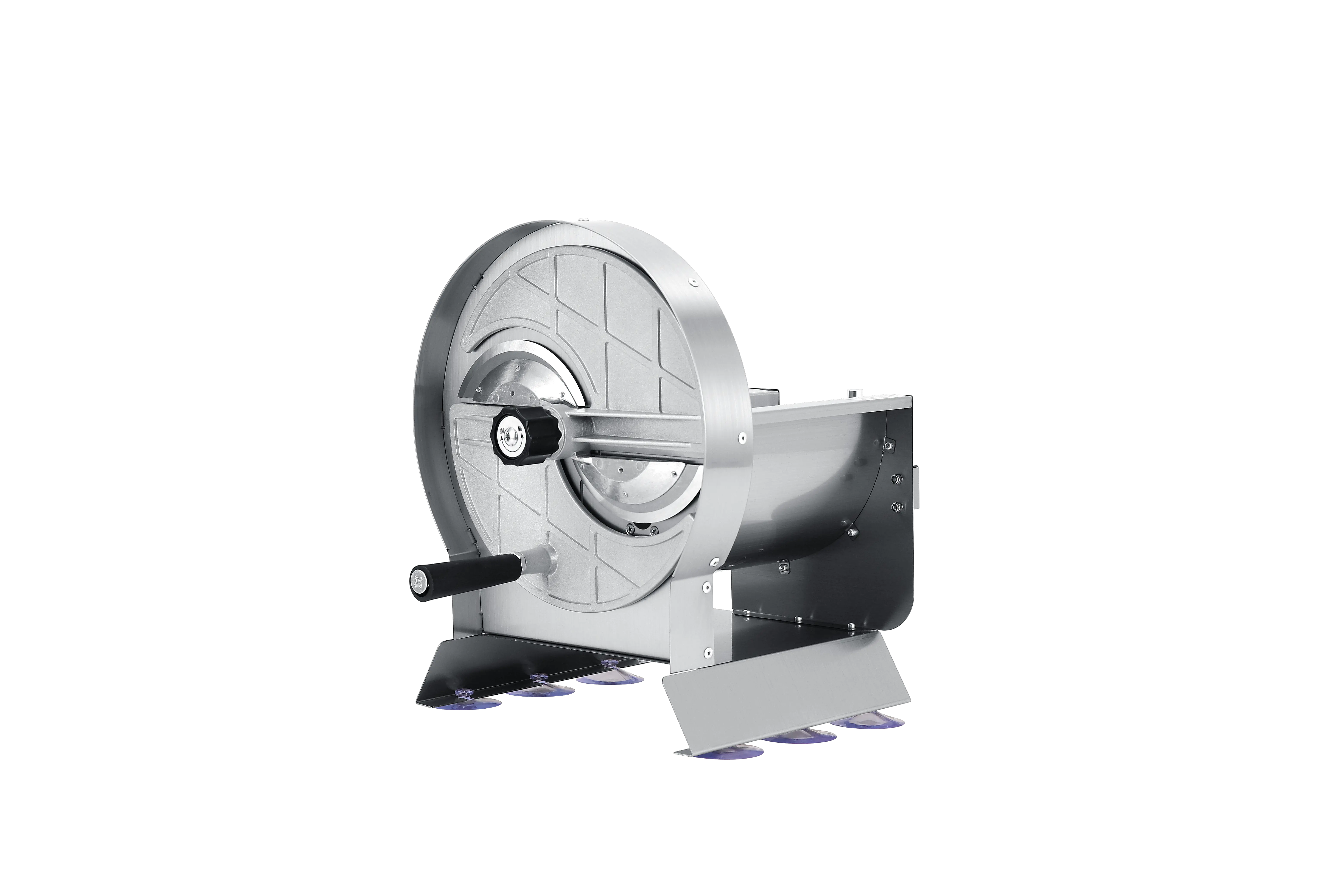
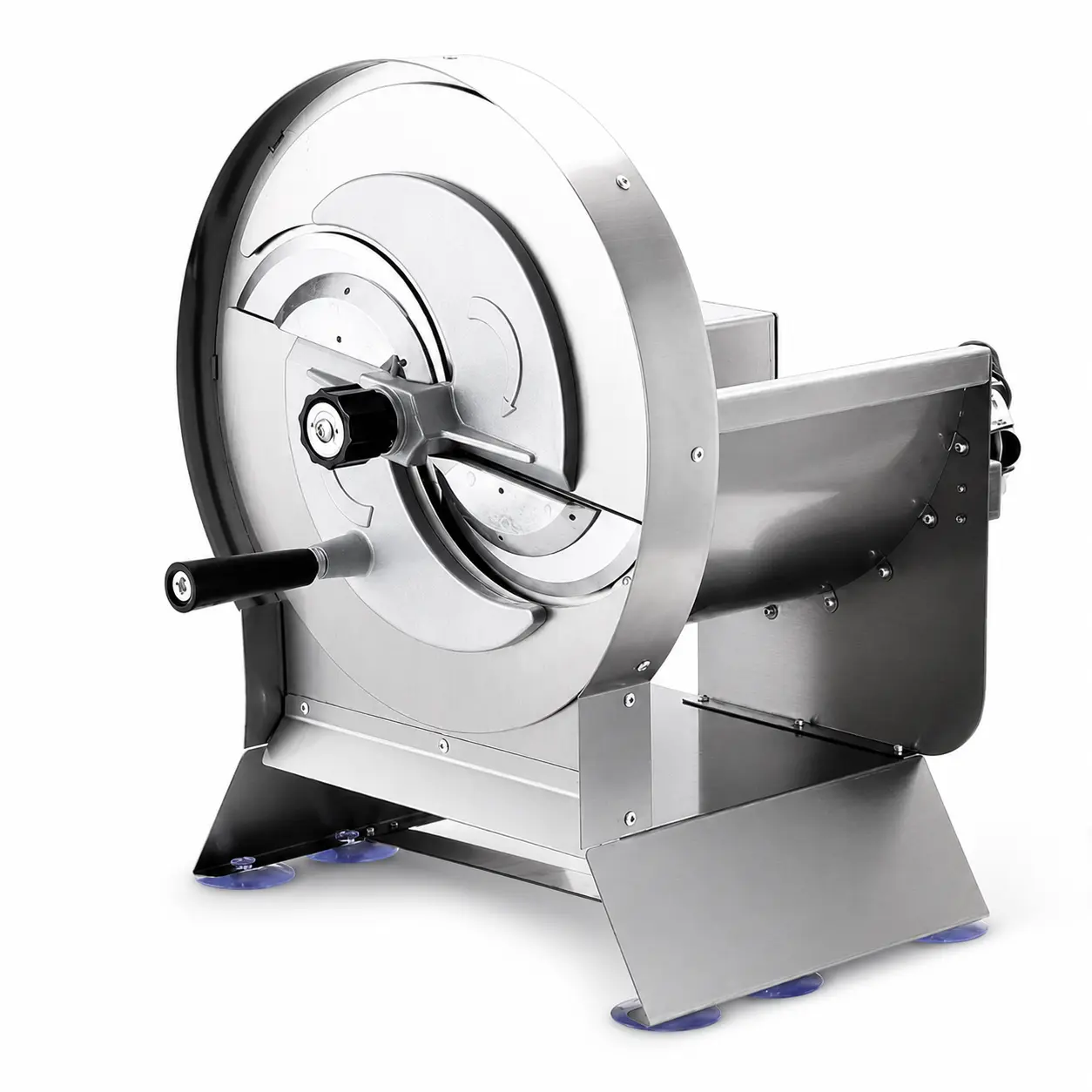
The visible build of this machine points to a practical category of equipment: enclosed, metal-bodied, countertop-sized, and intended to sit still while operators feed product through the front opening or loading area. That style is common in restaurant back rooms, catering kitchens, and small food-processing sites where floor space is limited but repeatable processing still matters.
A quick buyer’s lens
Before comparing models, buyers usually need answers to a few simple questions:
Does the machine handle the specific ingredient mix without clogging or tearing?
Is it compact enough for the workstation, but heavy and stable enough to stay put?
Can it be cleaned without disassembly that turns into a daily headache?
Are replacement parts and wear components easy to source?
Those questions sound basic, but they are where many purchasing decisions go wrong.
Construction Details That Signal Industrial Intent
The described unit uses brushed stainless-steel outer panels and visible fasteners, which is typical of food equipment built for repeated handling and cleaning. Stainless steel is not a magic word, but it is still a strong indicator that the maker has at least considered corrosion resistance and sanitation. In food settings, that is not optional. Moisture, oils, starches, acids, and constant wipe-downs will expose weak finishes quickly.
The enclosed body also matters. A fully shrouded machine reduces accidental contact with moving parts and keeps the work area tidier than an open mechanism would. The front circular opening with a central hub suggests a rotating cutting system or drive arrangement, though the exact function cannot be confirmed from the available description alone. Buyers should not assume the process is slicing, shredding, or grinding without checking the internal cutting geometry and the foods it is meant to handle.
The lower base and suction-cup feet or anti-slip pads are a small detail, but an important one. Countertop food equipment that walks across the bench during use quickly becomes a nuisance and a safety issue. Stable footing is especially valuable when the machine is processing firmer ingredients or when operators are working quickly under time pressure.
How to Match a Slicing Machine to the Job
Selection starts with product fit, not with the machine spec sheet.
If the operation needs uniform slices for vegetables, deli items, or similar ingredients, the blade system and feed path matter most. If the job is closer to shredding or coarse cutting, then the same machine class may or may not be appropriate depending on the internal tooling. Some suppliers use broad terms on purpose, but a buyer should ask for exact processing examples and, if possible, sample runs on real ingredients.
Volume is the next filter. A compact countertop unit can be ideal for restaurants and small production lines, but it may be the wrong fit if the operation expects long continuous runs. In that case, the motor duty profile, thermal management, and hopper design become more important than the external shape.
Food type is another practical divider. Soft produce, fibrous vegetables, and firmer prepared foods do not behave the same way in a cutting chamber. A machine that works well on one ingredient can jam, smear, or produce uneven results on another. That is not a flaw so much as a reminder that “multi-purpose” often comes with trade-offs.
Common Mistakes Buyers Make
One common mistake is buying for footprint alone. A compact machine looks easy to place, but if the feed opening is awkward or the cleaning access is poor, the space savings disappear in daily use.
Another mistake is treating enclosed food equipment as maintenance-free. Food contact machines need regular cleaning, careful inspection of fasteners, and attention to wear points. If the cutting components are difficult to remove or reassemble, operators may avoid proper cleaning, which creates hygiene problems later.
A third mistake is assuming every stainless exterior means the internal build is equally robust. The housing may be durable while the working parts underneath are not. Buyers should ask about the internal materials, the drive arrangement, and which parts are intended to be consumables or periodic replacements.
What to Ask Suppliers Before You Buy
For sourcing teams, a short but disciplined question set saves time:
What exact cutting function does the machine perform?
What ingredients has it been tested with in normal use?
How is the machine cleaned, and which parts require tool-based removal?
What wear components are available as spares?
Does the supplier provide drawings, dimension data, and installation requirements?
What are the power and safety requirements for the intended market?
Those are not glamorous questions, but they are the ones that prevent surprises after delivery.
If the machine is intended for OEM or private-label programs, it is also worth asking how much design customization is possible. Kitchen appliances often look simple from the outside, but details such as panel layout, access points, and foot design can make the difference between a successful product line and a return-heavy one.
Practical Use Cases in Commercial Food Operations
This type of enclosed, benchtop slicing machine can suit several buying environments. In restaurants, it can support prep consistency and reduce dependence on manual knife work. In catering kitchens, it may help standardize output during high-turn periods. In small food factories, it can serve as a compact processing station where a full-size line would be too expensive or too large.
For e-commerce and private-label buyers, the category is attractive because the form factor is familiar and easy to position. Compact industrial appliances also tend to photograph well for catalogs, which sounds minor until a product team has to build a broad kitchen-appliance range. Still, appearance should never outrun function. A good-looking machine that is hard to clean is a problem, not a product.
Why Enclosed Designs Often Win in the Field
An enclosed machine body does more than improve aesthetics. It helps protect moving parts, contain debris, and give operators a clearer sense of where the working zone begins and ends. In busy kitchens, that can reduce casual misuse. It also makes the equipment feel more “industrial,” which is not just branding; buyers often associate that with sturdier fabrication and longer service life.
That said, enclosure can cut both ways. If access panels are awkward or internal geometry is too tight, maintenance becomes frustrating. The best designs balance protection with serviceability. A machine that is easy to wipe down but hard to inspect is not really solving the full hygiene problem.
FAQ
Is this machine definitely a slicer?
Not from the available description alone. It appears to belong to the slicer/shredder/food-cutting category, but the exact function should be confirmed with product documentation.
Why does stainless steel matter?
It usually improves corrosion resistance, cleanability, and perceived durability in food environments. The benefit depends on the grade and the overall build, not just the visible finish.
What makes a benchtop unit different from larger processors?
Benchtop units prioritize compact size and local workstation use. Larger processors usually aim for higher throughput and more continuous operation.
A sensible next step for buyers
If you are evaluating Slicing Machines for a kitchen, production line, or private-label appliance program, start by matching the machine to the ingredient, the volume, and the cleaning routine. That sequence sounds ordinary, but it prevents most expensive mistakes.
Ask for the internal function details before you ask about exterior styling. Check serviceability before you compare marketing language. And if the supplier cannot clearly describe what the machine cuts, how it is cleaned, and what parts wear out first, keep looking. In this category, the practical details are the product.