What Buyers Usually Mean When They Ask About Slicing Machines
Slicing Machines sit in an awkward but important corner of food processing: they are not glamorous, but they decide whether prep work stays consistent, safe, and fast enough to keep a kitchen moving. For restaurants, catering teams, and commercial food prep stations, the real question is rarely whether a slicer can cut something. It is whether the machine can handle daily use without turning a simple task into a bottleneck.
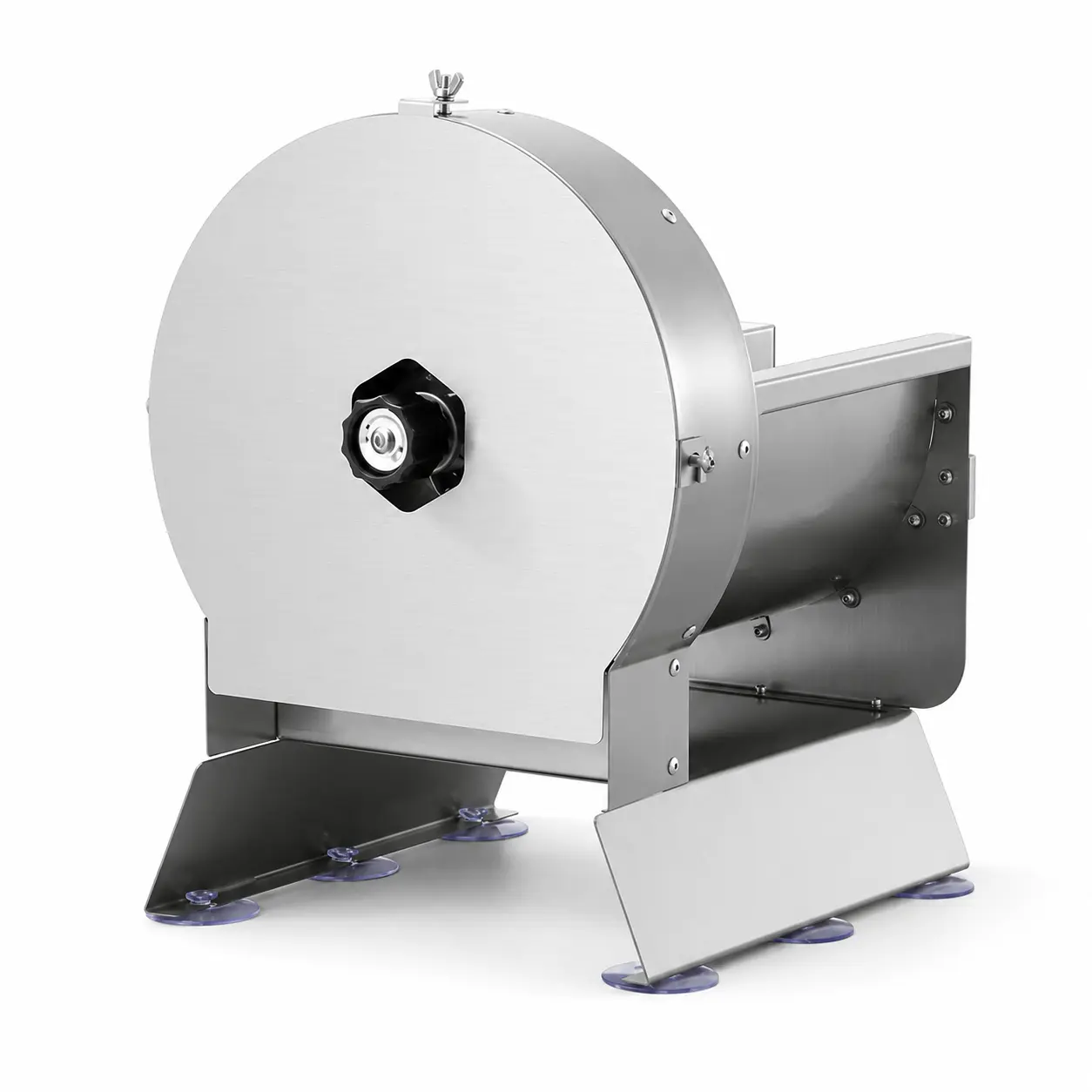
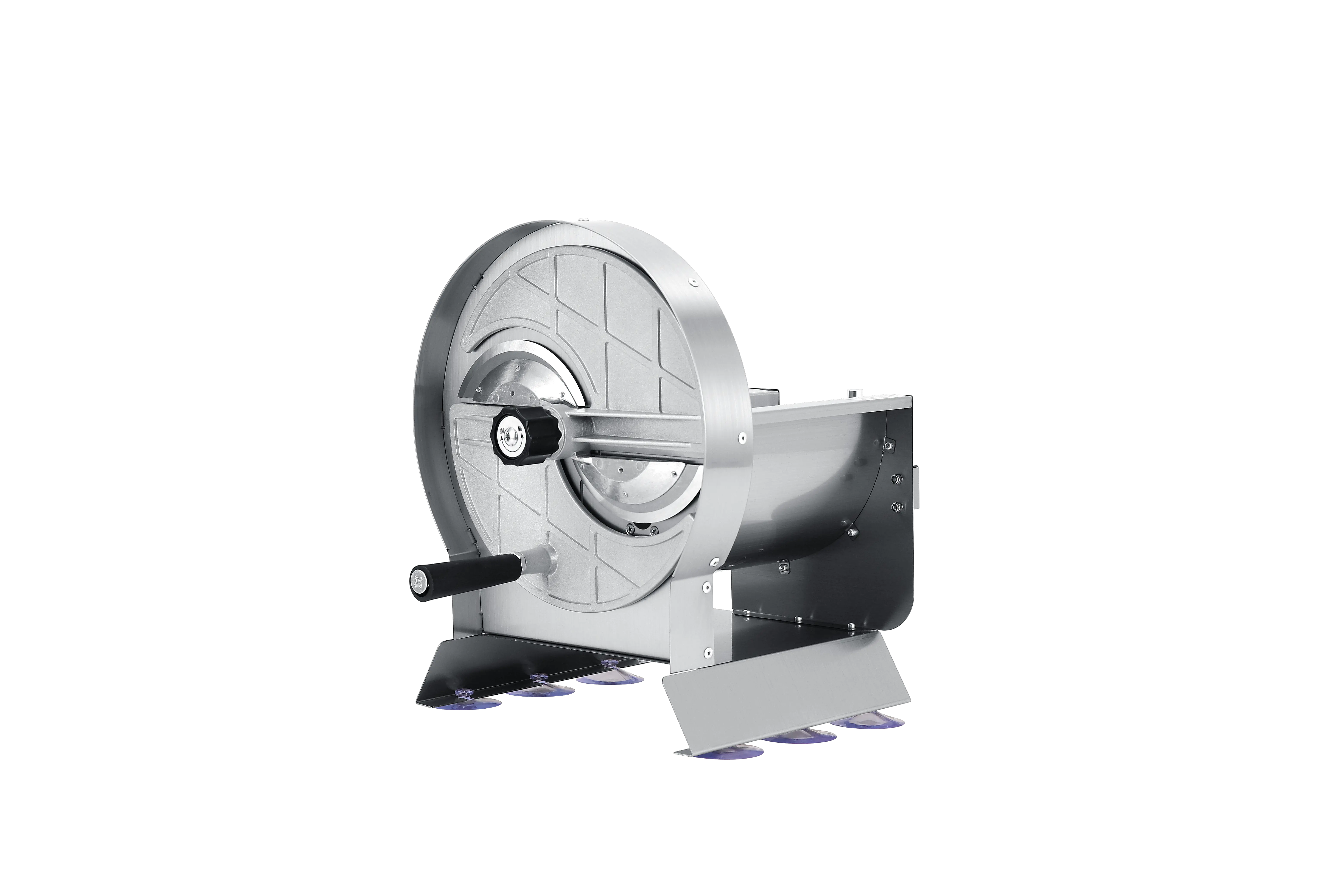
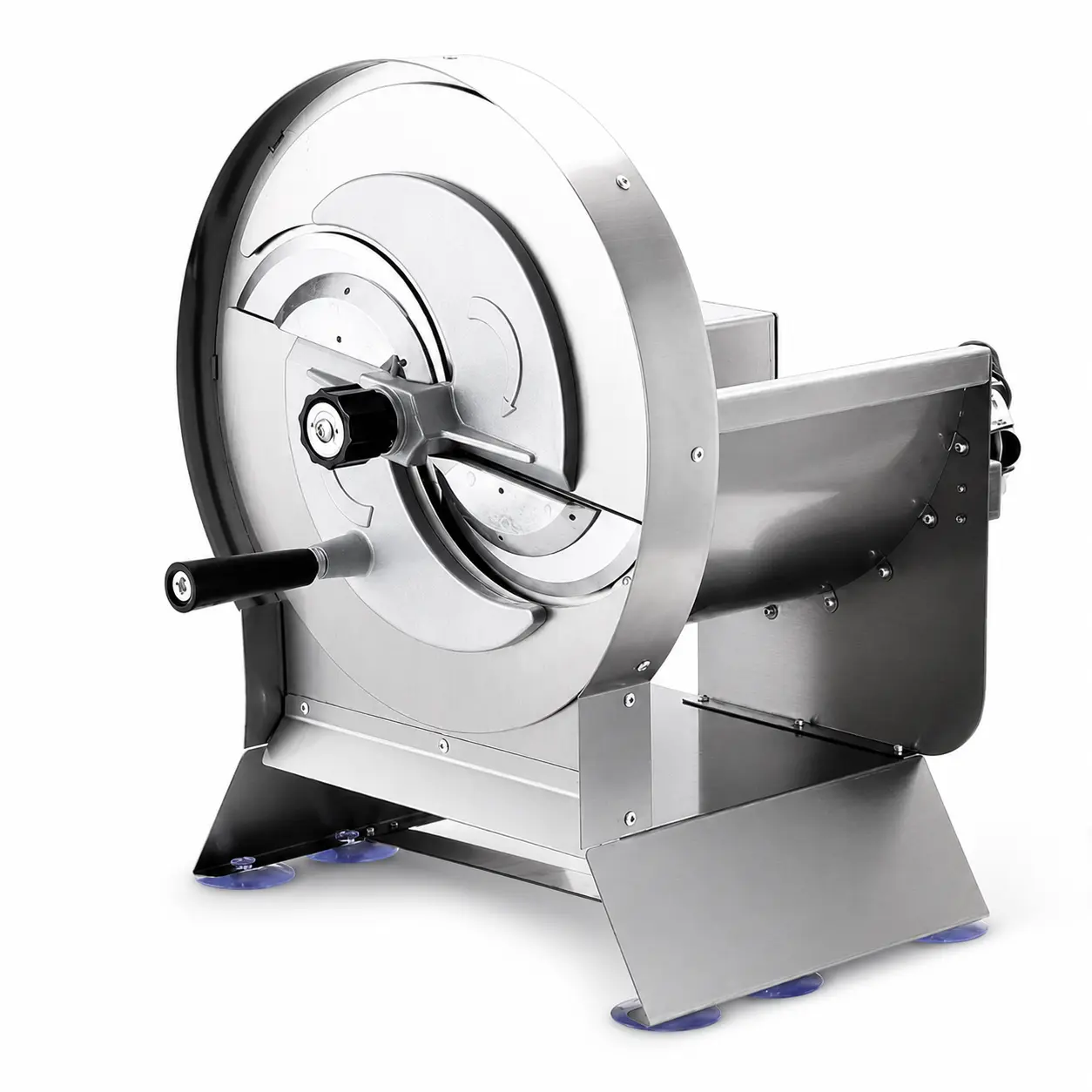
That is why buyers tend to look past the brochure language and focus on the working details: footprint, cutting style, ease of cleaning, and how much operator effort the machine demands. In the case of the manual food slicer/cutter shown here, the compact countertop design and hand-crank mechanism point to a machine built for controlled, mechanical slicing rather than a high-speed automated system. That can be an advantage in smaller prep areas, provided the intended use matches the unit’s actual capacity.
Why This Type of Machine Matters in Real Kitchens
Food prep equipment has a way of revealing its value only after the first busy service. A slicer that seems optional on paper may save real labor when vegetables, fruits, or other ingredients must be processed in repeatable quantities. A manual unit can be especially useful where electrical access is limited, where the operator wants direct control, or where the prep task is short-run and repetitive rather than continuous.
There is also a procurement angle that gets overlooked. A compact manual unit often fits into kitchens that cannot spare the space or budget for larger powered equipment. That does not make it a substitute for every application, of course. It means the buyer needs to decide whether the task is light enough for manual operation and whether the team is willing to trade automation for control and simplicity.
Quick Reference: What to Look at Before Buying
1. Footprint and placement
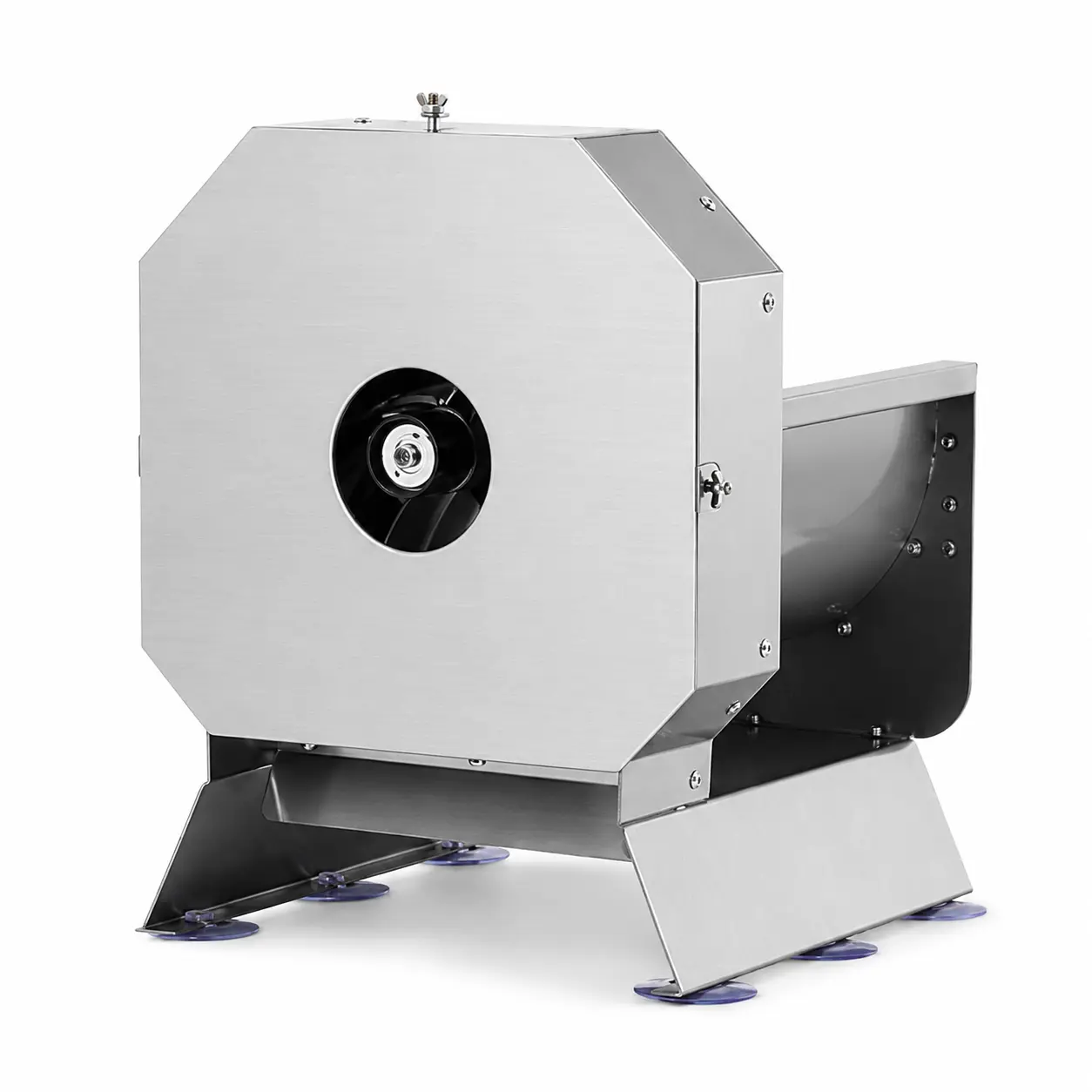
A countertop machine needs to sit securely and leave room for loading, crank operation, and cleaning access. The visible angled base and rigid housing suggest a stable footprint, which is important in a wet or fast-moving prep area.
2. Construction and finish
The brushed metal body indicates a commercial-style build. In food equipment, that usually matters more than appearance. A solid metal housing is easier to associate with durability and a more serious working life than lightweight consumer-grade plastic.
3. Drive method
This unit appears to use a manual crank. That can be a strength when the operator wants immediate control over feed and rotation. It can also be a limitation if output volume is high. Buyers should be honest about volume requirements rather than assuming “manual” means lower maintenance and therefore automatically better.
4. Cleaning and sanitation
Any slicing machine used in food prep needs to be easy to access and wipe down. Even if a machine looks simple, hidden corners around the cutting chamber and crank assembly can slow cleaning. That becomes a practical issue long before it becomes a technical one.
How Manual Slicing Machines Differ from Powered Equipment
The biggest difference is not just speed. It is how the operator interacts with the cut. A manual slicer depends on the person turning the mechanism and feeding the product at a steady pace. That gives a kitchen more control when the ingredient is delicate or when the task is short and specific. Powered machines, by contrast, are usually better when the shop wants higher throughput and more consistent output over longer runs.
For sourcing teams, the decision often comes down to workflow. If prep is intermittent, a manual unit may be sufficient and easier to place on a crowded prep table. If the operation slices the same ingredient all day, every day, a manual mechanism may become a labor issue rather than a cost saver.
There is no universal winner here. The right choice depends on whether the machine is supporting a small prep task or carrying part of the production load.
Practical Selection Criteria for Sourcing Managers
Beyond the obvious sizing question, several procurement details matter more than many buyers expect.
First, confirm the intended food category. The product notes suggest a general food-processing use, but the exact foods, blade type, and cutting mode are not confirmed. That means buyers should not assume the machine is suitable for every vegetable, fruit, or ingredient without vendor clarification.
Second, ask how the machine is assembled and serviced. In food equipment manufacturing, the difference between a simple sheet-metal body and a well-finished assembly can show up in alignment, vibration, and long-term usability. The visible structure suggests a mechanically driven product, which makes build quality especially important.
Third, check what the supplier can support on the OEM/ODM side. The provided notes mention OEM/ODM support for kitchen appliances, which is relevant for buyers who need private-label sourcing or a tailored specification. That can matter as much as the base machine itself, especially for distributors and equipment brands.
Fourth, verify the claims that matter to your market before placing them in a spec sheet. The supplier notes mention ISO9001 certification and CE/FCC/UL claims, along with rapid sample production and bulk delivery timelines. Those may be useful commercial indicators, but buyers should still confirm documentation for the exact product being purchased rather than assuming every line applies automatically.
Common Mistakes Buyers Make
One frequent mistake is underestimating the difference between “compact” and “light-duty.” A machine can have a small footprint and still be robust, but the two are not the same thing. Another is assuming a manual unit is always simpler to manage. In reality, the operator experience can be more demanding if the crank action, feed path, or cleaning steps are awkward.
Another practical problem is buying to a photo instead of a process. A unit may look ideal for a restaurant prep table and still be wrong if the real workload is high-volume catering. The right question is not whether the machine looks commercial. It is whether it fits the pace, product mix, and staffing pattern of the kitchen.
A final caution: do not overread visible metal construction as a guarantee of food-contact suitability, corrosion resistance, or hygiene performance. Those details depend on materials grade, finishing, and design choices that are not always obvious from an image.
Where This Kind of Slicer Makes Sense
This style of machine makes the most sense in kitchens that value controlled prep over maximum throughput. Think of small to medium restaurant prep stations, catering operations that need portable or countertop equipment, and foodservice teams that want a mechanical tool with a straightforward operating rhythm.
It can also be attractive where the buying team wants an OEM/ODM-friendly product category. Compact food equipment is often easier to adapt for different markets than highly specialized industrial systems, provided the manufacturer can support the required branding and specification changes.
Buyer Questions Worth Asking the Supplier
Before committing, ask a few direct questions:
What foods is the machine intended to process?
Is the cutting assembly fixed, interchangeable, or configurable?
What materials are used in the food-contact and housing components?
How is the machine cleaned and maintained during daily use?
Can the supplier provide product-level documentation for compliance claims and market-specific requirements?
What customization is available if the unit is being sourced under OEM/ODM terms?
Those questions are basic, but they save a surprising amount of trouble later. A neat-looking slicer is not enough if the kitchen cannot service it or the distributor cannot document it.
FAQ
Is this machine electric or manual?
The visible design suggests a manual crank-driven mechanism. That said, buyers should confirm the final configuration with the supplier rather than assuming from appearance alone.
Is it meant for commercial use?
Yes, the form factor and metal construction point to a commercial kitchen application, such as restaurants, catering, or food prep areas.
Can it handle all types of food?
That is not something to assume. The exact cutting mode, blade type, and suitable ingredients are not specified here, so the best practice is to verify with the vendor.
Why choose a manual slicer instead of a powered one?
Manual units can offer lower complexity, direct control, and a compact footprint. They are best when output needs are moderate and the task fits the operator’s pace.
What a Serious Buyer Should Do Next
Treat this category as a workflow decision, not just an equipment purchase. If the machine fits the prep volume, cleaning routine, and available counter space, a manual slicer can be a practical piece of kit. If the kitchen needs higher throughput, it may be the wrong tool no matter how solid it looks.
The next step is straightforward: ask for the actual product specification, confirm the cutting function and food compatibility, and request documentation for any certification or OEM/ODM claim that matters to your market. That is the kind of due diligence that keeps a sourcing decision from becoming an expensive mismatch.