Why Slicing Machines matter in commercial food operations
Slicing Machines are one of those pieces of kitchen equipment that only get noticed when they are missing, underperforming, or making the same cut differently ten times in a row. For engineers, sourcing managers, and foodservice operators, the real question is rarely whether a slicer can cut. It is whether it can cut consistently, safely, and without slowing down production. In a deli, central kitchen, catering line, or small food-processing shop, that consistency is what turns a labor task into a repeatable process.
The challenge is that “slicer” can mean several things. Some units are compact countertop machines built for modest batches. Others are more specialized food-processing tools designed for repetitive portioning. A buyer usually has to decide between speed, footprint, cleaning effort, operator comfort, and the level of control needed over the finished slice. That is where a practical review helps: not by promising every machine does everything, but by showing which features affect day-to-day operations.
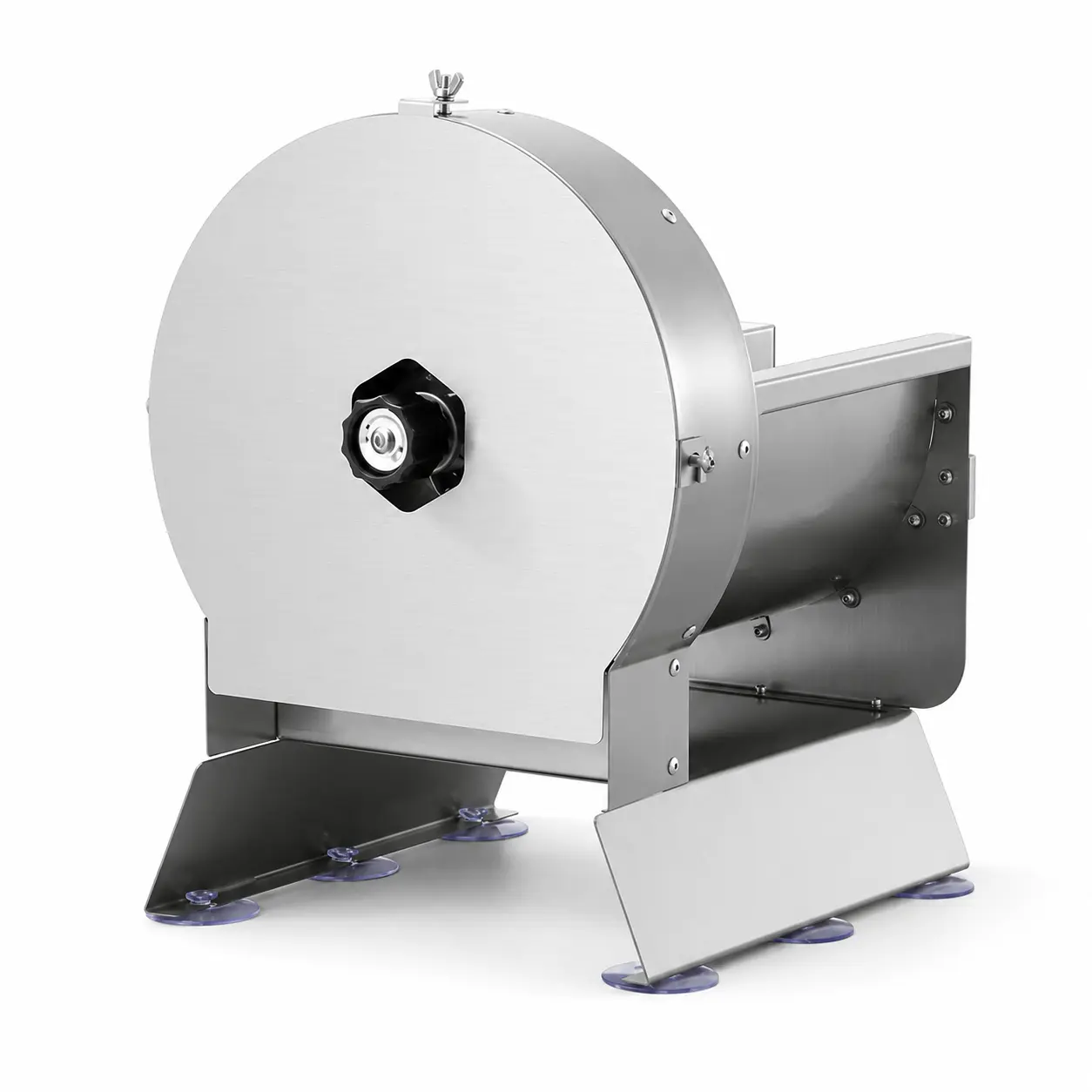
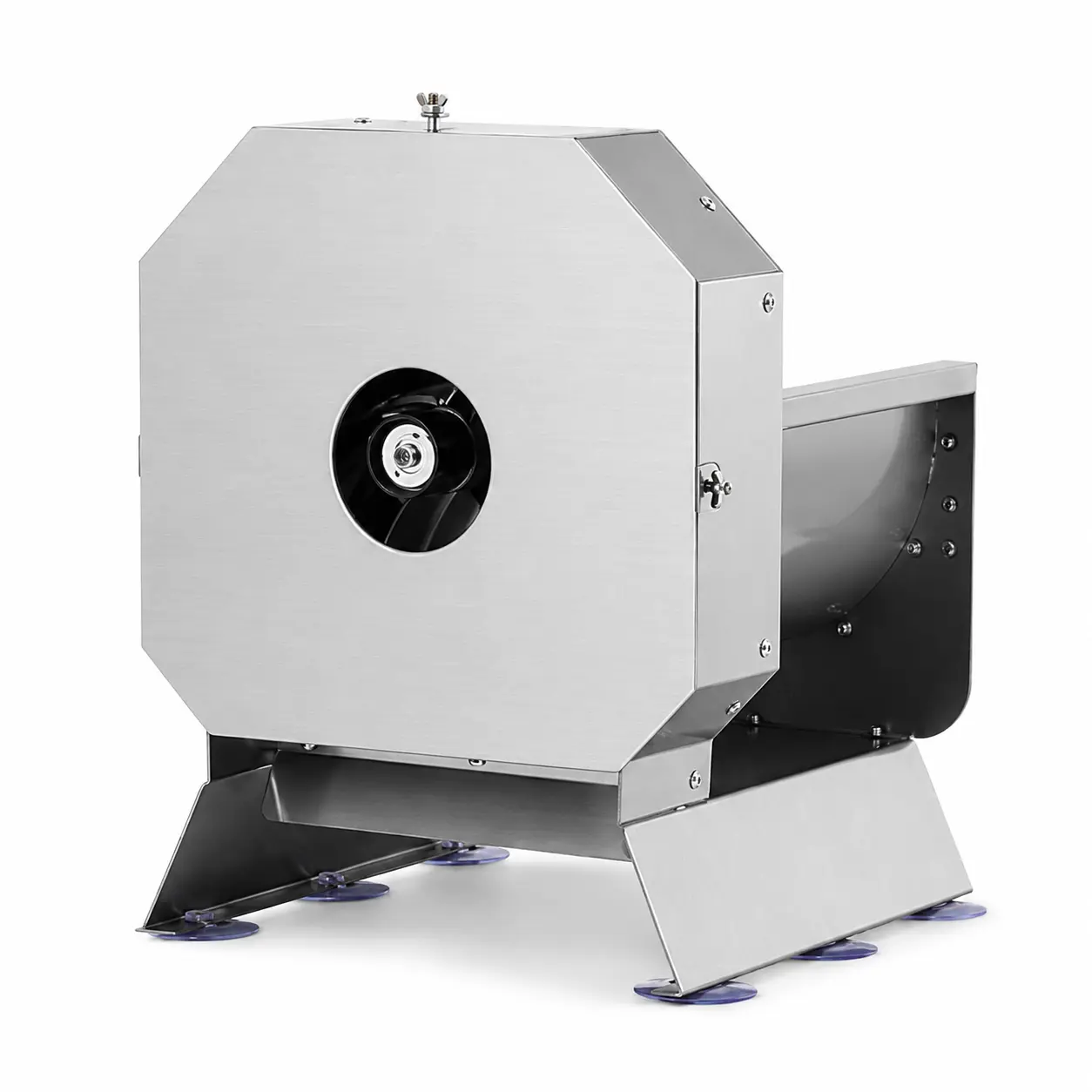
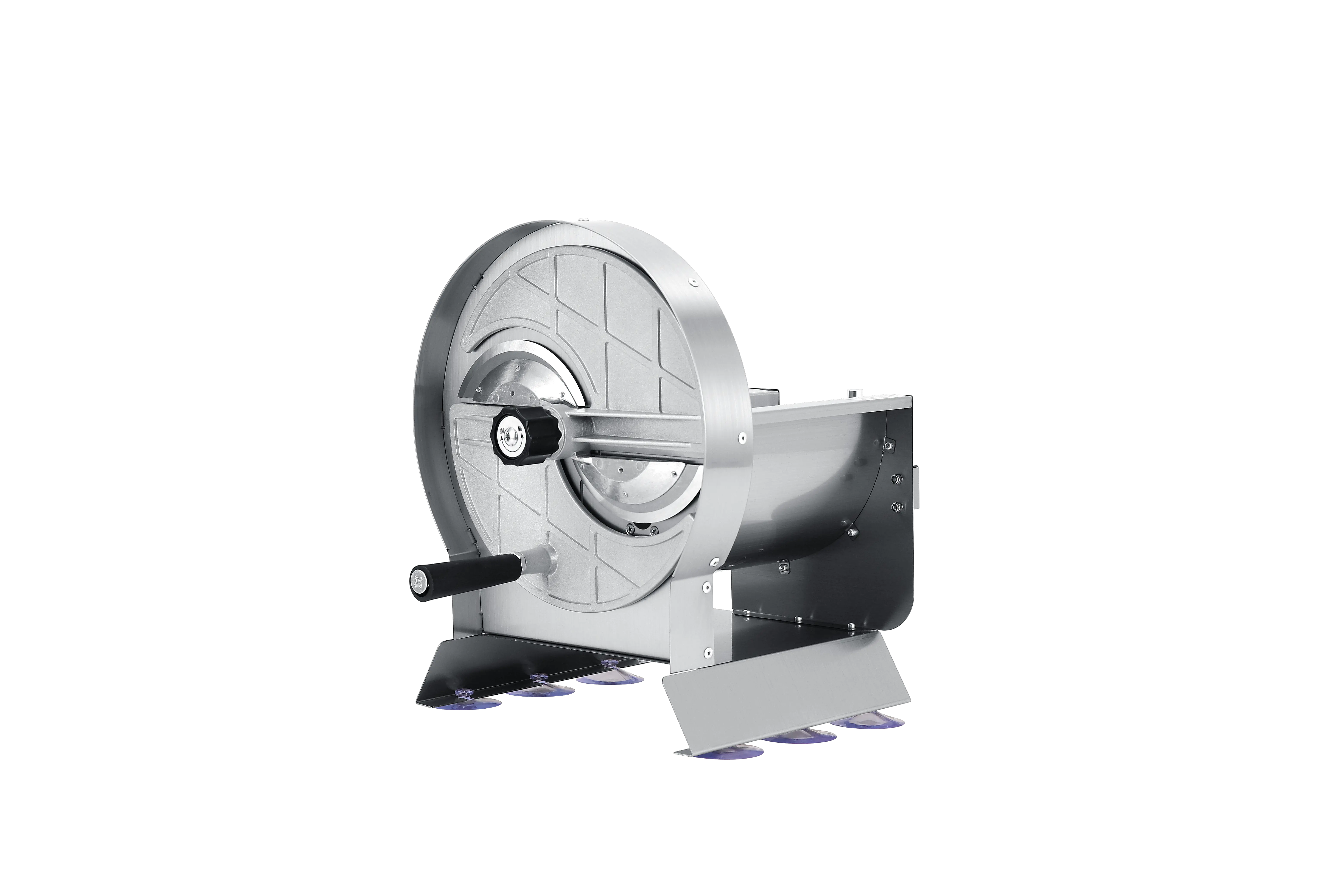
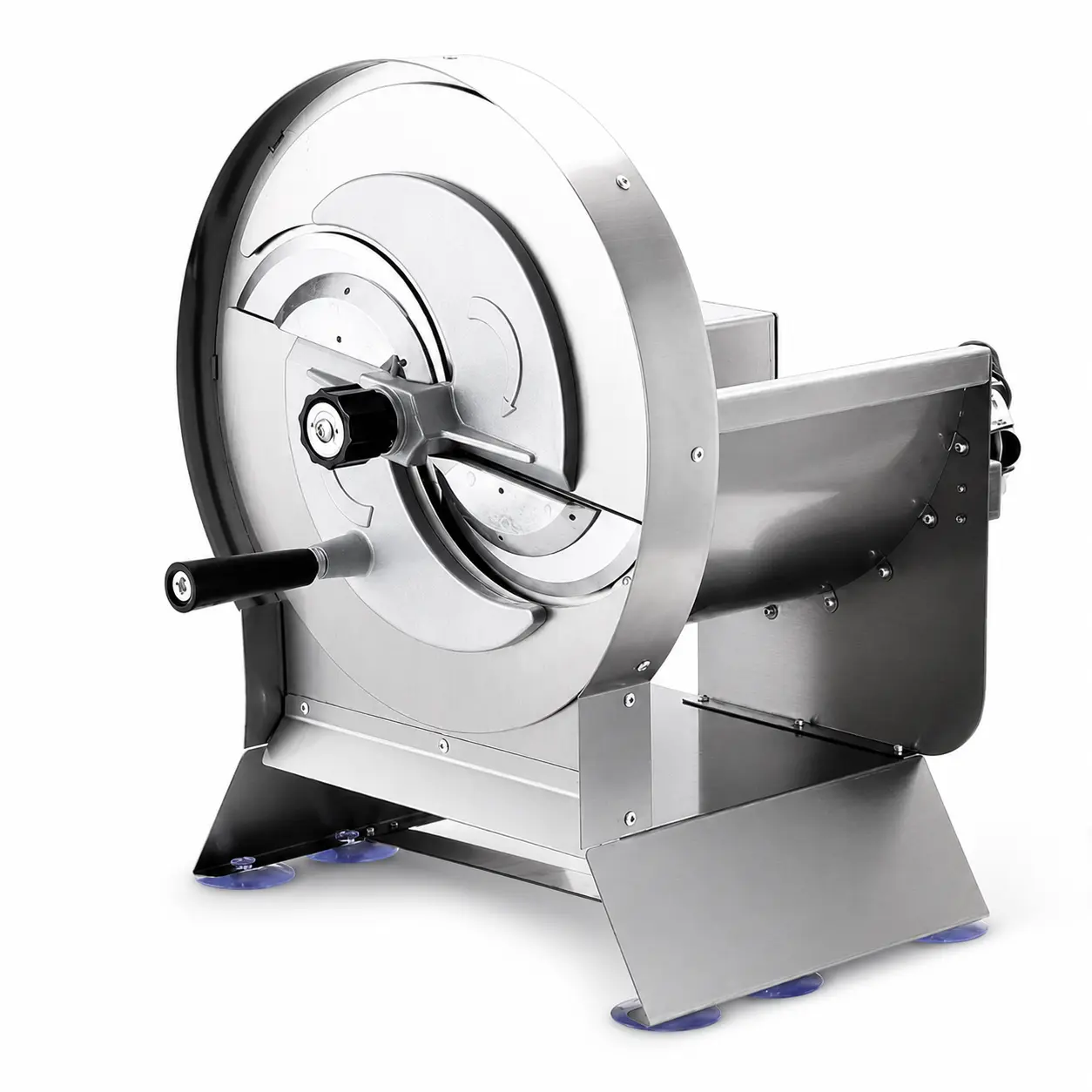
The product details available here point to a metal-bodied countertop unit with a silver-gray finish, black side panel, black hand crank or knob, and small blue suction-cup or anti-slip feet. It has the look of a compact commercial appliance rather than a large floor-standing machine. That alone tells a buyer something important: it is likely aimed at workspaces where bench space is tight and repeatable slicing matters more than high-throughput automation.
What a buyer should look for first
When people shop for slicing equipment, they often start with the wrong question. They ask about blade size or motor power before they settle the basics. In practice, the first filter should be the job itself.
Ask what needs to be sliced, how often, and by whom. A machine used occasionally for prep is a different purchase from one that runs through the lunch rush or supports packed-order fulfillment. If the application is narrow, a simpler design can be a good thing. Fewer moving parts usually means fewer surprises, easier training, and less time spent cleaning around complex assemblies.
The visible build of this type of machine suggests a few practical advantages. Metal housing is generally preferred in commercial settings because it feels more robust, handles repeated wiping better than lightweight plastics, and usually supports a more durable service life when used correctly. The compact base is another plus for kitchens where equipment has to sit close to other stations without dominating the counter.
Visible design cues and what they suggest
Even without a full specification sheet, the structure gives clues. The large circular front assembly suggests a cutting zone designed around a central spindle or locking point. A rear feed or housing section implies material is introduced from one side and processed through the front cutting area. The black hand crank or knob may indicate a manual adjustment or feed mechanism, though the exact operation cannot be confirmed from the available information.
That uncertainty matters. Buyers should not assume a visible crank automatically means the unit is fully manual, or that a compact housing means low output. Some commercial food machines use simple control layouts because operators need fast, intuitive use rather than a crowded control panel. On the other hand, a machine with minimal controls may also offer fewer adjustment options. If your process depends on fine slice control, that is something to verify before purchase.
The small suction-cup or anti-slip feet are a detail worth noticing. In countertop equipment, stability is not a minor feature. A slicer that shifts even slightly during operation creates operator fatigue and can become a safety problem. Feet that grip the work surface improve confidence, especially when the machine is used on stainless benches or smooth prep tables.
Quick comparison: what this type of slicer is good for
Best fit
Compact commercial kitchens, small food-processing businesses, central kitchens, catering teams, and e-commerce or private-label buyers seeking countertop slicing equipment.
Potential strengths
Uniform slicing, bench-friendly footprint, metal construction, and a design that appears suited to repetitive portioning work.
Likely limitations
Because exact capacity and automation level are not provided, buyers should not assume it is suited to high-volume industrial throughput. The same caution applies to blade configuration, thickness range, and food compatibility.
Material and construction considerations
For food equipment, material selection is not just about appearance. Stainless or brushed steel surfaces are common in commercial kitchens because they are easier to keep visually clean and tend to resist corrosion better than plain painted steel in wet, washed, or humid environments. A metal enclosure also supports a more serious impression for private-label buyers who want the machine to feel like a commercial tool rather than a domestic appliance stretched into service.
That said, buyers should still check the details that matter in actual use: which parts contact food, whether the blade area can be accessed for cleaning, how guards are shaped, and whether the unit has dead zones where food residue can collect. A machine can look sturdy and still be awkward to sanitize if the geometry is poorly thought out. In food operations, that is one of the common disappointments.
OEM and ODM buyers: where this category can fit
The supplied notes indicate that the company supports OEM/ODM work and mentions ISO9001 plus CE, FCC, and UL compliance for some products, though those claims are not verified by the image itself. For sourcing teams, that kind of positioning usually matters because slicers are often bought not only as equipment, but as a platform for private branding or regional market adaptation.
If you are building a private-label range, ask for the basics early: branding options, packaging customization, spare-part support, and what can be changed without affecting production stability. Even a modest countertop machine can become difficult to support if replacement parts are not standardized. A buyer-friendly supplier should be able to explain the service path as clearly as the sales pitch.
Selection criteria that actually save money
There are a few purchase criteria that are more useful than glossy brochure language.
First, think about operator workflow. If a slicer sits too far from the prep line, staff will avoid it. If it requires excessive repositioning of product, output will slow. Second, think about cleaning. Every extra minute spent on disassembly multiplies across shifts. Third, think about stability and ergonomics. A machine that is comfortable to use is more likely to be used correctly.
Fourth, verify the support package. For food-processing equipment, after-sales parts availability can matter more than the initial difference in purchase price. A small machine with weak support can quickly become a shelf ornament. That is especially true for buyers running multi-unit operations, where downtime affects consistency across locations.
Common mistakes buyers make
The most common mistake is buying for the wrong throughput. A compact slicer may be perfect for batch prep, but frustrating in a production line if the team expects continuous heavy-duty operation. Another mistake is ignoring sanitation access. If the blade guard, housing, or feed area is difficult to reach, cleaning will be rushed, and rushed cleaning is where food equipment starts to cause problems.
A third mistake is treating compliance claims as a substitute for verification. Certifications and market approvals matter, but buyers should still request documentation for the exact model, not just a general statement about the factory. That is a small but important distinction, and it prevents awkward surprises during import, internal QA, or reseller onboarding.
Practical advice for sourcing and product teams
If you are evaluating Slicing Machines for commercial use, build your checklist around the application first, then the machine. Define the food item, expected volume, operator skill level, and cleaning routine. After that, ask for confirmation of the unknowns: power source, blade type, slice thickness range, capacity, dimensions, weight, and whether the unit is manual or electric. Those are not trivial details; they are the difference between a workable deployment and a frustrated pilot run.
For procurement teams, it also helps to request clear photos or a sample unit from multiple angles. The front, feed area, base, and any adjustment points should all be visible. If the supplier is offering customization, confirm what changes affect mechanical performance and what are purely cosmetic. The most expensive mistake in this category is buying a machine that looks right but does not fit the workflow.
FAQ
Is this type of slicer suitable for restaurants?
Likely yes, if the restaurant needs compact countertop slicing for prep work and not high-volume industrial output. Exact suitability depends on the food item and the machine’s verified specifications.
Can buyers use this for private label sales?
That appears possible based on the supplier notes about OEM/ODM support, but buyers should confirm branding, packaging, spare parts, and documentation requirements before placing orders.
What should be confirmed before purchase?
At minimum: manual or electric operation, slicing method, material contact points, cleaning access, dimensions, and the exact compliance documents attached to the model.
Next step
If you are comparing countertop food equipment, treat Slicing Machines as a process decision, not just a product decision. The right unit should fit the food, the line, and the people using it. Ask for the exact model specifications, confirm service and parts support, and request clear operational details before committing. That is the simplest way to avoid a machine that looks suitable on paper but proves awkward once it reaches the prep table.