Why buyers look for a dual-layer digital touch food dehydrator
A Dual-Layer Digital Touch Food Dehydrator sounds simple on paper: a countertop machine that removes moisture from fruit, vegetables, herbs, and other foods. In practice, it sits at the intersection of product design, food handling, and small-scale manufacturing. For sourcing managers and product teams, the real question is not whether it dehydrates food, but whether it does so consistently, cleanly, and in a form factor that suits the target market.
That matters because buyers are rarely shopping for a single household gadget. They may be evaluating a unit for home use, a small retail line, a private-label launch, or sample production in an OEM/ODM program. The visible product details here point to a compact stainless-steel cabinet with a glass door, touch controls, stacked mesh trays, and a digital temperature display. Those features tell you quite a bit about how the product will be judged in the market: by usability, presentation, and repeatable performance more than by headline gimmicks.
There is also a practical caveat worth stating upfront. A dehydrator can look impressive in a product photo and still be awkward in daily use if airflow is uneven, the trays are hard to clean, or the controls are too minimal for real kitchen work. Buyers need to think beyond the front panel.
What the product design suggests
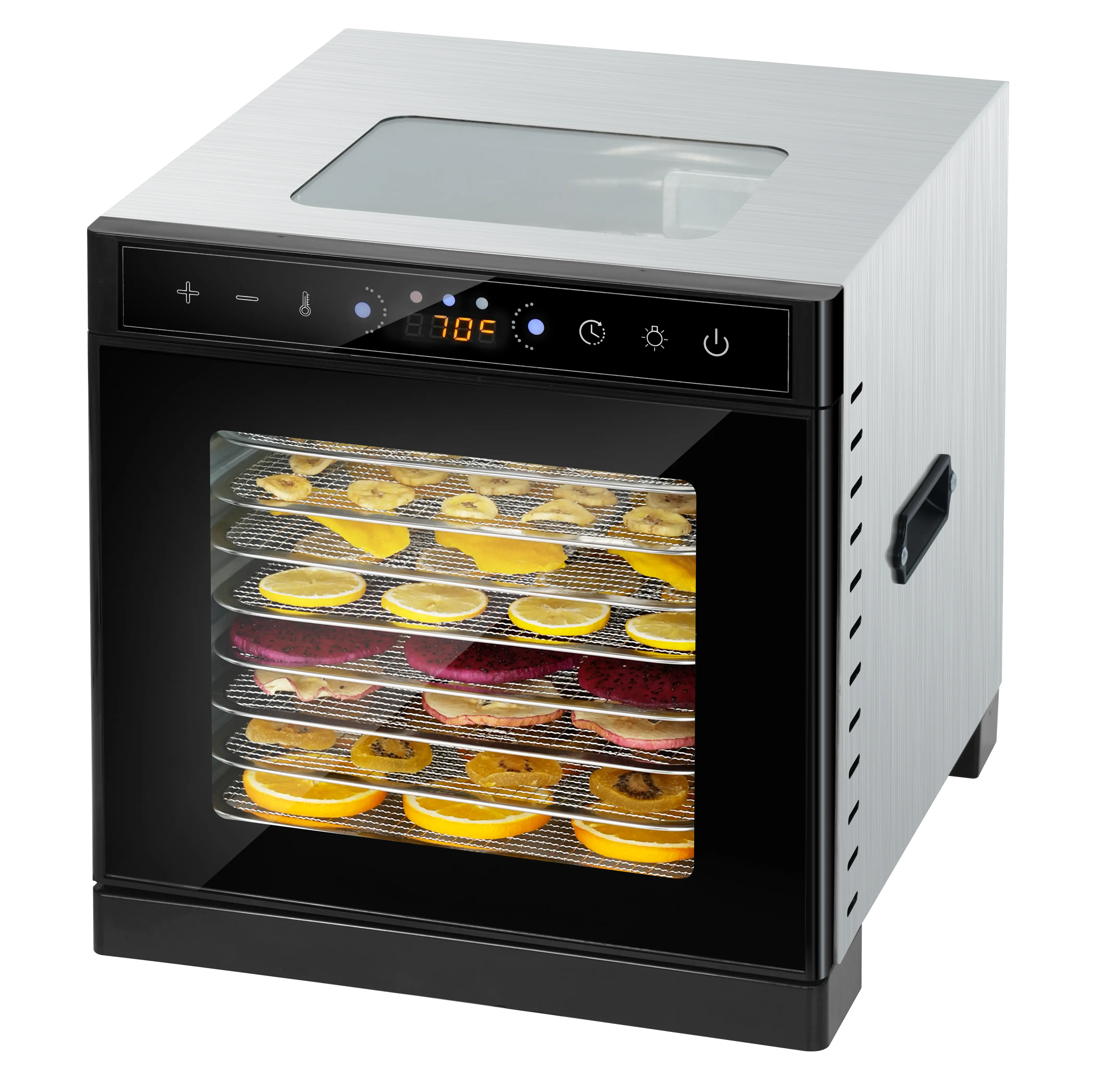
The observed unit has a rectangular stainless-steel body with a brushed metallic finish, a large front viewing door, and a black touch-style control strip above the chamber. A digital readout showing 86F is visible, along with touch icons for power, light, temperature, and timer-style settings. Inside, multiple removable mesh trays are stacked vertically.
That combination is important. Stainless steel gives the appliance a more durable, commercial-leaning appearance than molded plastic. The glass door helps users monitor drying progress without opening the cabinet and losing heat. Stackable trays increase usable volume, though the exact tray count and spacing are not confirmed. For many buyers, the visual impression is almost as important as the technical specification sheet. If the machine is meant for brand display, retail resale, or kitchen-counter appeal, the cabinet style is doing real work.
The side carry handles also suggest the unit is intended to be moved occasionally rather than installed permanently. That makes sense for a countertop electric food dehydrator used in home kitchens, test kitchens, or small-batch food operations.
Quick takeaways for sourcing teams
If you need the short version, here is what the product image and factory notes point to:
1. It is positioned as a countertop dehydrator or drying oven for fruit slices, vegetables, herbs, and related foods.
2. The design leans toward premium presentation: stainless-steel housing, glass door, and touch controls.
3. The multi-tray layout makes it suitable for small-batch production rather than one-off household drying.
4. The factory notes describe OEM/ODM-style supply support, including rapid samples in 7 days and bulk delivery in about one month, though such claims should still be confirmed during sourcing.
5. Some certification and shipping statements are supplied by the factory, including ISO9001 and product claims such as CE, FCC, and UL. Those should be verified against the exact model and destination market requirements.
How this kind of dehydrator is used
Most readers will already know the broad category, but the use cases are broader than many catalogs imply. A Dual-Layer Digital Touch Food Dehydrator is not only for making dried apple slices for home snacking. It can support dehydrated vegetables, fruit leathers, dried herbs, tea ingredients, and specialty snack development. In a small business context, it can also be used for sample development, limited production runs, or seasonal products that do not justify a large industrial tunnel dryer.
For food brands, the value of this category lies in controlled moisture removal. Drying changes shelf life, texture, weight, and packaging behavior. That means the machine is not just a kitchen appliance; it is part of the product process. If the end product will be sold, consistency becomes especially important. A batch that is under-dried may spoil faster, while an over-dried batch can turn brittle or unappealing.
That is why a digital display and touch controls matter. They do not guarantee precision on their own, but they give operators more confidence than a purely mechanical knob system. Even a basic readout helps staff document settings across repeated batches.
What to evaluate before you buy
Airflow and heat distribution
The exact internal heating method is not confirmed in the supplied information, so buyers should not assume a particular technology. Still, airflow is one of the first things to ask about. In a stacked-tray dehydrator, uneven circulation can create top-to-bottom differences in dryness. If a supplier cannot explain how the machine moves hot air through the chamber, request a sample and test it with real product, not just empty trays.
Tray material and cleaning
Mesh trays are common because they allow air to pass through the food load. The question is whether they are easy to remove, wash, and reinsert without bending or snagging. For food-contact use, cleaning workflow can matter as much as wattage. A machine that is cumbersome to sanitize may not be practical for a retail or workshop environment.
Control interface
The visible touch panel is a selling point, but it should also be judged for clarity. Are the icons intuitive? Is the display readable across the room? Can operators change temperature and time without digging through a nested menu? These details affect training time and reduce mistakes on a busy production floor.
Cabinet construction
The brushed stainless-steel body and glass viewing door suggest a more durable, export-oriented product line. Still, buyers should inspect door seal quality, latch strength, handle comfort, and panel fit. A food dehydrator with a nice face but weak door hardware tends to disappoint after a few months of use.
OEM and ODM considerations for appliance buyers
The product notes indicate a factory that supports custom production and export-oriented supply. That makes sense for this category. Small appliances are often sourced through OEM or ODM programs because brands want control over appearance, control layout, packaging, and market positioning without building the appliance from scratch.
If you are sourcing a food dehydrator for private label, a few questions should be settled early. What parts can be customized: color, logo, tray count, door style, control language, packaging, or plug type? Which changes require new tooling, and which are simple revisions? What is the sample process? The supplied notes mention rapid samples in 7 days and bulk delivery in about one month, but buyers should treat those as supplier claims until the project scope is finalized in writing.
Another practical point: certifications. The notes mention ISO9001 and product claims including CE, FCC, and UL. Those are relevant signals, but they are not a substitute for checking whether the exact version you are buying is certified for the destination market. A good sourcing team will request documents tied to the model, not just a general brochure.
Common mistakes when comparing dehydrators
The most common mistake is assuming that a larger-looking cabinet automatically means higher real capacity. Tray spacing, airflow pattern, and loading practices can matter more than external dimensions. Another mistake is choosing only on price and ignoring cleaning access. A food appliance that is difficult to maintain becomes a recurring cost in labor and downtime.
Buyers also sometimes overvalue a long feature list while underestimating usability. A light function and touch screen are nice, but if the display is confusing or the door is awkward, operators will work around it. In small-batch food processing, friction tends to show up quickly.
There is one more caution worth noting. If you plan to sell dried foods under your own brand, do not rely on generic sample performance alone. Test with your actual raw materials, because fruit thickness, sugar content, water content, and cut consistency all change drying behavior.
When this style of dehydrator fits best
This product style fits best when appearance, moderate batch size, and simple digital control matter together. It is a sensible fit for home-focused brands, specialty snack makers, test kitchens, and e-commerce sellers who want a product that looks more refined than a basic plastic dehydrator. The stainless-steel cabinet and viewing door also help in retail settings, where product presentation influences perceived value.
It may be less suitable if you need exact process control, industrial throughput, or a fully documented thermal profile. The available information does not confirm the internal heating system, wattage, timer range, temperature range, or capacity, so those details must be clarified before any serious procurement decision.
Buyer checklist before placing an order
Ask for the model specification sheet, not just photographs. Confirm tray count, chamber size, electrical requirements, and cleaning instructions. Request sample testing with your actual product. Verify which certifications apply to the exact model. Clarify whether the unit is intended for home use, light commercial use, or export retail channels. And if the supplier is advertising fast shipment or daily output claims, make sure those figures line up with your order size and packaging requirements.
It is also worth asking how replacement trays, doors, gaskets, and control panels are supported after delivery. Small appliance buyers often focus on the first shipment and forget the service side, which is where a lot of supplier relationships either hold up or quietly fail.
FAQ
Is this a commercial dehydrator or a home appliance?
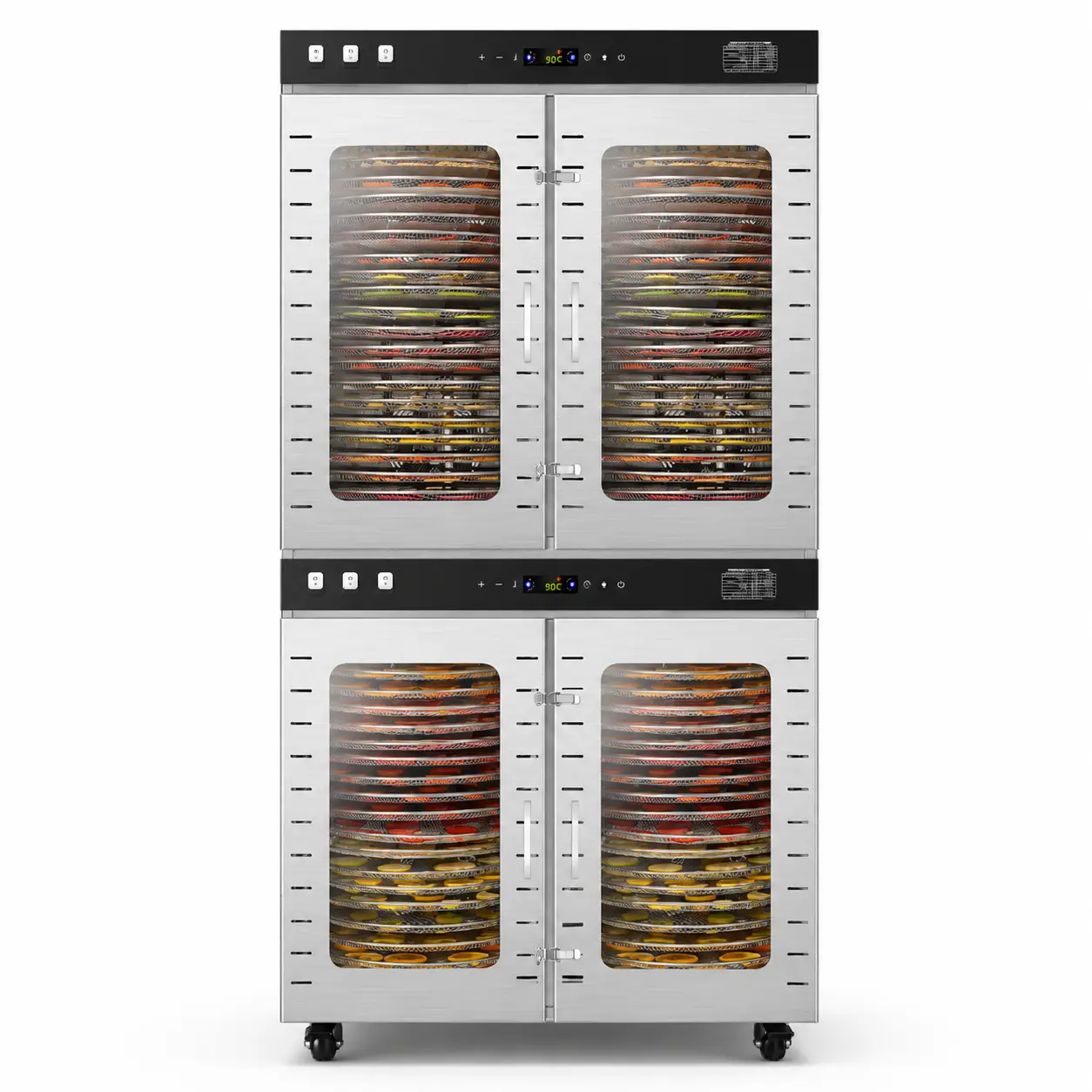
Based on the visible design, it could serve either context depending on the final specification. The stainless-steel cabinet and multi-tray layout suggest broader use than a basic household unit, but the exact duty level is not confirmed.
Can it be used for fruit, vegetables, and herbs?
Yes, that is the intended application suggested by the product information. It is described as suitable for drying fruit slices, dehydrated vegetables, herbs, and similar foods.
Are the certifications verified?
The notes supply claims for ISO9001, CE, FCC, and UL, but those should be verified against the specific model and purchase market before ordering.
Can the factory support custom OEM orders?
The supplied information says yes. It references custom production and export-oriented supply, with sample and bulk delivery timelines also mentioned. As always, confirm the scope in writing.
What to do next
If you are evaluating a Dual-Layer Digital Touch Food Dehydrator for sourcing, start with the real use case: home resale, specialty snack production, sample development, or light commercial drying. Then match the machine to that use case with a practical sample test. The product’s stainless-steel body, glass viewing door, digital display, and stacked trays make it a strong candidate for buyers who value presentation and manageable batch processing.
The next step is simple enough: request the full specification sheet, ask for a sample unit or video test, and verify the certification and delivery claims against the exact model you plan to buy. That is usually where the real buying decision becomes clear.